Translate

Sunday, February 28, 2021

The Gift of Peace


Jesus said,

Peace I leave with you. 

My peace I give to you. 

I do not give to you as the world gives. 

Don’t let your heart be troubled or fearful.

John 14:27

Jesus parting gift to his disciples is the Gift of Peace. What is the difference between the peace that Jesus offered and the peace we exchange when we wish one another? What we offer one another is our wish to live in peace with one another. It is down to earth, human. It is our wish for our families, companies or nations to live in peace without any conflicts.

The Hebrew word for peace, shalom (שׁלום) is derived from a root denoting wholeness, salvation, one with God and neighbor. This is the word used when Jews greet each other giving and receiving peace from one another. It was this gift of Shalom with which Jesus was blessing his disciples.

Jesus said, “I give you my peace and my gift is nothing like what the world has to offer.” The peace that Christ has to offer is not the absence of problems and conflicts, but the confidence of the living presence of God with us and in us. It is the assurance that God is in control and will help us through it all come what may, and whatever be the outcome. It is the blessed assurance that all is well with our Souls. 

The peace that Jesus offers is not merely absence of war. Nor is it great wealth or worldly comforts. These give tangible benefits for a temporary period of time. Often they do more damage to our hearts and minds if we begin to crave for them. Jesus offers peace in our souls that our sins have been forgiven and we can live in a loving relationship with the Living God who will guide and lead us through our lives. It is the peace that came from the blood Christ shed on the old rugged cross (Colossians 1:20).


One of my favorite hymns that comforts me and fills me with hope in times of trials is, ‘It is well with my soul.’ It was written by Horatio G. Spafford following a family tragedy in which his four daughters died aboard the S.S. Ville du Havre on a transatlantic voyage. In this hymn he affirms that it is well with his soul despite the trials and tribulations that he faces in his life. He is confident that he has been forgiven and one day he will see the Lord. It is the peace he knows deep within his soul.


Paul says, “Therefore, since we are justified by faith, we have peace with God through our Lord Jesus Christ.” (Romans‬ ‭5:1)‬ He goes on to say that we can rejoice because problems and hardship help to develop endurance, character and hope in Christ Jesus.
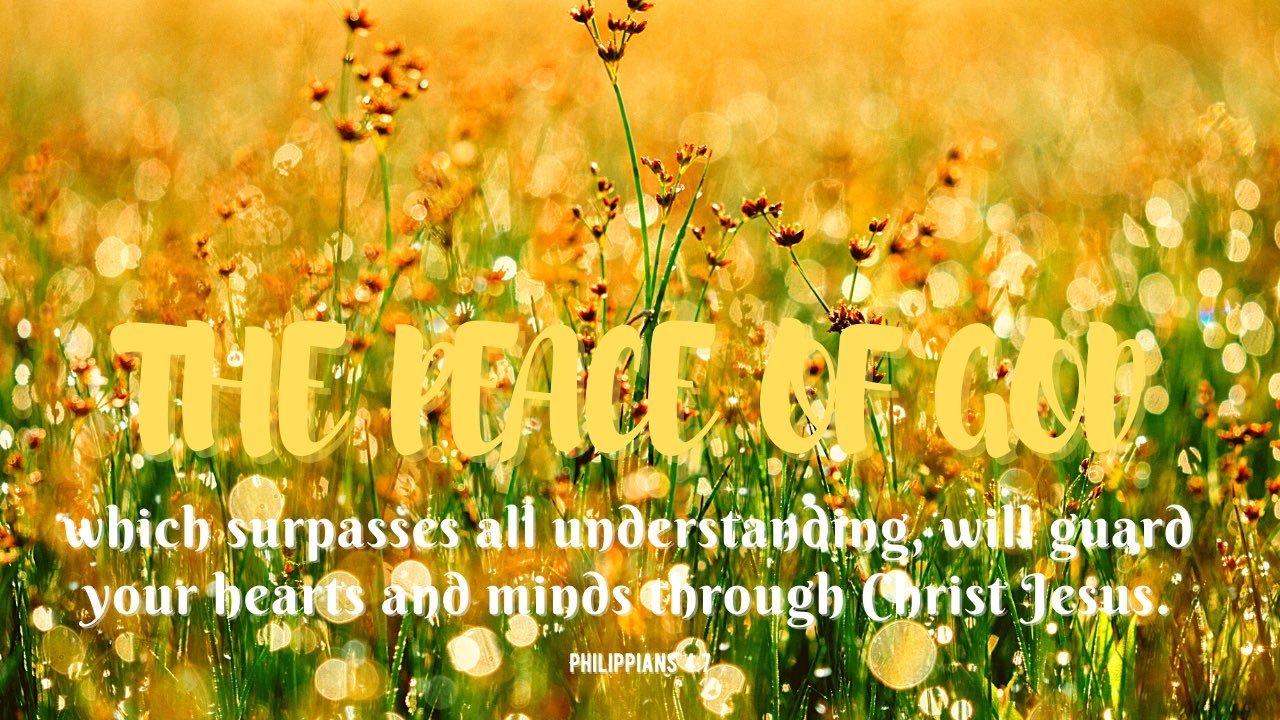


Paul says, “Be Anxious for Nothing, but in Everything By Prayer and Supplication, with Thanksgiving, Let your Requests be made known to God”( Philippians 4:6-7). He says that we should turn our anxieties and fears over to Jesus. When we do that, the peace of God that surpasses all understanding will guard our hearts and minds in Christ Jesus.The troubles and fears that crop up in this world are only temporary, Christ is always in control of our lives. The blessed assurance that Christ offers is everlasting peace within us. Christ is our Peace.


Prayer

Lord Jesus, even as we contemplate the mystery of your pain, suffering and the blood shed on the old rugged cross, we thank you for the gift of everlasting peace you have offered us in You. Help us to follow in the ways you have set for us and one day come to share in the glory prepared for us. Amen

Friday, February 26, 2021

The Way


Jesus said,

I am the Way, the Truth, and the Life. 
No one comes to the Father except through Me.

John 14:6

Time after time Jesus told his disciples throughout his ministry that he was going away. The disciples really did not grasp what he meant by that. Nor did his disciples ever imagine that the way he eventually goes away would be “The Way of the Cross”. When Thomas frankly asked Jesus at the last supper where he was going, Jesus spoke of himself as the way, the truth and the life. What did Jesus mean when he took three themes of the Jewish faith and declared that it was fulfilled in him? Eugene Peterson says, there are two biblical characterizations for people of faith disciple and pilgrim. Disciple (mathetes) are apprentices to our master, Jesus Christ. We live in a growing-learning relationship. The Pilgrim (parepidemos) are people who spend their lives heading home. To be a disciple and pilgrim is to make a conscious decision to go the way Christ leads us, believing that all our concerns, desires, and talents, find the way to integrate all our interests, passions, and gifts, with our present problems and needs, and our eternal hopes and expectations. It is following the way the Lord leads us to green pastures that nourish and strengthen us for the growth and understanding of the work he gives us to do. He empowers us to persevere and endure the hardship that come our way by standing beside us and guiding us along the way to our eternal home.

1. Jesus referred to himself as “The Way.” The One through whom all who seek to approach God must pass to enter into fellowship with God the Father. It was the prayer of David in Psalm 86:11, “Teach me thy ways, O Lord.”  Or John the Baptist cry (Mark 1:3), “Prepare the way of the Lord,” also found in Isaiah 40:3. It was Christ’s way of saying that I am with you and in you and will lead you in the way you should go to live in fellowship with God. It is interesting to note early Jewish Christians in the first century referred to themselves as followers of “The Way” (Acts 9:2). However in Antioch the Non Jewish followers of Christ first referred to themselves as Christians (Acts11:26 -  Χριστιανούς (Christianous) From Christos; a Christian, i.e. Follower of Christ.)


2. Jesus said he is “The Truth.” Jesus was the only person who could claim to be the very embodiment of truth. He lived a life without sin. All of us have sinned and fallen short of the glory of God. It is Christ alone in whom we can call upon in truth to live in fellowship with God. It is through Christ we come to know God. It is his wise words that enter into our hearts and minds filling us with the joy of living in fellowship with God (Proverbs 2:10).

3. Jesus said he is “The Life.” To the Samaritan woman at the well, he said he would give her springs of living water that would quench her thirst for God. The springs of living water is also a reference to the fountain of life (Psalm 36:9). Here the Psalmist says, “For with you is the fountain of life; in your light we see light.” Jesus says in John 4:14, “ But those who drink the water I give will never be thirsty again. It becomes a fresh, bubbling spring within them, giving them eternal life.” Eternal life is based on the promises of God (The Truth), not how we feel or think. The eternal life we receive when we believe in Christ is not only here on earth but goes on eternally to our divine life in The Trinity.


The way Jesus portrayed to the disciples, was a living parable of washing their feet before the last supper. He said they should do the same by being humble and loving in their ways of reaching out to the world. How can we humbly and faithfully practice the example of servant leadership that Jesus showed ? Jesus is the way through whom our prayers go to God the Father. This way Jesus paved for the whole world was by dying on the old rugged cross, he saved us from our sins and defeated death. The curtain that separated us from God was torn. Now we all have access to God the Father through Jesus who is the Way, the Truth and the Life. Jesus blazed the trail for us to journey through life to our home in Heaven. He has promised to be with us not only in this life but to be with us when we pass on from this world to he next. Christ says, “I am with you and in you and will lead you in the way you should go to live in fellowship with God.”


Lord Jesus, Show me your ways,
Teach me your paths. 
Guide me in your truth, 
For you are my God, 
My life is in your hands.
Amen.


Thursday, February 25, 2021

The Helper


Jesus said,

The Helper, the Holy Spirit, 
Whom the Father will send in My Name, 
He will teach you all things, and 
Bring to your Remembrance 
All things that I said to you.

John 14:26

Jesus speaks to his disciples telling them that the time for his departure is looming ahead. Be that as it may, God the Father will send the Holy Spirit (Paraklētos) as an emmisary for Jesus. The actual Greek word used is Παράκλητος (Paraklētos) means advocate, intercessor, consoler, comforter, or helper. An Advocate will plead on their behalf before God about their trials and tribulations with God’s laws. A Comforter will calm, console and cheer them through the great challenges they face in their ministry.

The Holy Spirit will play a role in two key areas of their lives. The Holy Spirit will teach and remind them and all of us who follow Jesus in the years to come of things, as he had been doing with them during his time with them.

1. Teach (Direct or Admonish) us all things :- To be a disciple of Christ is to be continuously learning to walk humbly with the Lord. It is to seek God’s will through the highs and lows of life. To be listening to the prompting of the Holy Spirit and reading God’s Word as the Spirit guides us as we grow in understanding of the truth of God.


2. Bring to remembrance (call to mind) all things :- The Psalmists (Psalm 119:11) says, “Your word have I hid in my heart that I may not sin against Thee”. The Holy Spirit brings truths to us when we face tough choices and enticing temptations. The key role the Holy Spirit plays in these times is as an early warning to keep us away from trouble. 

Ignorance is bliss they say. A person who doesn’t know about a problem doesn’t worry about it. Spiritual ignorance or blindness can equally be damning for us too. Let us pray for the Holy Spirit to alert, guide and council us through our life’s journey. The Holy Spirit lives with and in us, and opens the eyes of our hearts to see the truth. Along with guiding us to do good works, and live lives that are pleasing to God.

Prayer
Lord Jesus, you know what it was to be tempted when you fasted for forty days in the wilderness. Give us grace to restrain ourselves and live in obedience to your words. You know our weaknesses and nothing is hidden from you. Pray for grace to live faithfully in your sight all the days of our lives. Amen.


Tuesday, February 23, 2021

Walking with Jesus


Whoever says, “I abide in Him,” 

Ought to walk just as Jesus walked.

1 John 2:6


In 1 John, the Apostle John writes this letter at a time when there were many false teachers leading Christs followers away from the faith. He wanted the followers to continue to live in fellowship with God and one another just as he had all the years of his long life on earth. So St.John emphasized three aspect of God in his letter.

1.    God is love and invites us to abide in God’s love. 

2.    God is light and we have fellowship with God when we walk in God’s light. 

3.    When we abide in Christ and Christ lives in our hearts, God gives us eternal life.

How do we come to know Christ in our hearts, minds and daily lives? It is by reading the Bible and how he reveals himself to his followers and the whole world. Through Christ’s life and ministry we come to see a God who loves us and wants us to live in loving fellowship with him and other followers. To know Christ is to let  his words speak to us and walk in the light of his words. So St.John says if we say we abide in Christ we must walk in the footsteps of Jesus and all those who followed after him. 

Prayer

Lord Jesus dispel all the darkness that surrounds me and be the light of my life. Teach me to walk in your words of faith, hope and love. Amen.

Love Rules


In Mere Christianity, C.S. Lewis sheds his practical light on The Rule of Love. "The rule for all of us is perfectly simple. Do not waste time bothering whether you love your neighbor, act as if you did, as soon as we do this, we find one of the greatest secrets.” When we behave like we love someone, we will come to love, or hate less. When we base our deeds on faith and love in the grand scheme of life, God reveals to us the good.

How do we faith it until we make it? Prayer is our litmus test to see where we stand with the Lord. When we pray we should examine our lives to see what we do with our intentions. When we busy ourselves trying to live pure lives in a way just so that others may admire our dedication we are on shaky ground. Then again there are times when our hearts are filled with anxiety and anger, our hearts get darkened, and in the end faith in God becomes a struggle. Sometimes, we find ourselves listening to all the perfect precepts but never practicing them. This usually leads us to pointless contemplation and controversy, and we sometimes find ourselves leading double lives.  How can we lead transformed lives?

Jesus Christ alone through the Holy Spirit working in our hearts and minds can bring about this transformation. We ask the Holy Spirit to come into our lives and direct us to do His will. What is the will of God? Jesus clearly tells us that the Golden Rule is to love God and our neighbor (Mark 12:30-31). It is in these relationships of love that our faith resides. St. Paul further illustrates this by saying that if he has the gifts of tongues but no love within him, he is nothing but a clanging cymbal or noisy gong (1 Corinthians 13:1). He ends the chapter saying three remain in his heart, faith, hope and love, the greatest of these is love (1 Corinthians 13:13).

To St. Paul, the essence of it all was faith expressing itself in love (Gal 5:6). When we lead our lives closely governed by the law, we become a slave to the law. But if we live our lives governed by the gospel of grace we find ourselves free to love and forgive. Seeing through the lens of love our thoughts and actions find a new reality in life. Our focus is no longer on the law but on our relationship with Jesus Christ and others.

We must see faith and love as gifts from God. Using these gifts in our daily lives will lead to a beautiful fruitful life. Faith that leads us to deeds of love is to base our work on the Golden Rules of Love.


Prayer
Lord please draw near to us, that we may come to know you and open our hearts to your presence in our inner being. Ignite our darkened hearts and minds haunted by anxieties and fears with the light of your love. May we by your grace come to love you and our neighbors. Amen
  

Friday, December 11, 2020

Guide Me, O Thou Great Redeemer

 Guide Me, O Thou Great Jehovah 


 A Journey of Faith in Song


In the rich tapestry of hymns that adorn Christian worship, few resonate as deeply as "Guide Me, O Thou Great Redeemer." Originally titled "Lord Lead Me through the Wilderness," this timeless hymn encapsulates the pilgrimage of faith, guiding believers through life's trials and triumphs with unwavering trust in God's providence.


The hymn's origins can be traced back to William Williams, a Welsh hymnwriter of the 18th century, who penned the original Welsh lyrics under the title "Arglwydd, arwain trwy’r anialwch." Later translated into English by Peter Williams in the 19th century, the hymn has since become a cherished anthem of faith for believers around the world.


The journey depicted in the hymn mirrors the biblical narrative of the Israelites' exodus from slavery in Egypt to the promised land of Canaan. Just as Moses led the Israelites through the wilderness, so too does the hymn implore God to lead and guide believers through the rugged terrain of life, from the bondage of sin to the freedom of redemption.


The opening line, "Guide me, O Thou great Redeemer, pilgrim through this barren land," sets the tone for the spiritual odyssey that unfolds. It acknowledges the barrenness and desolation of the wilderness journey, yet it also acknowledges the presence of God as the guiding light in the midst of darkness.


As the hymn progresses, it traverses themes of trust, protection, and provision. Lines such as "Bread of heaven, feed me till I want no more" and "Strong Deliverer, be Thou still my strength and shield" evoke images of God's sustenance and protection amidst life's challenges.


Moreover, the hymn captures the tension between the longing for earthly comforts and the ultimate pursuit of heavenly glory. The refrain, "Bread of heaven, bread of heaven, feed me till I want no more," reflects the longing for spiritual nourishment that transcends the temporal pleasures of this world.


Ultimately, "Guide Me, O Thou Great Redeemer" serves as a poignant reminder of the believer's journey of faith, from bondage to liberation, from despair to hope, and from wandering to rest in the arms of God. It encapsulates the essence of the Christian pilgrimage, with its trials and tribulations, victories and defeats, all guided by the steadfast hand of the Great Redeemer.


 "Guide Me, O Thou Great Redeemer" is more than just a hymn; it is a spiritual anthem that resonates with believers across generations and continents. Its timeless message of trust, dependence, and perseverance continues to inspire and uplift souls on their journey of faith, leading them ever closer to the promised land of eternal rest in the presence of God.


Thursday, December 10, 2020

Amazing Grace

The Spiritual Journey Behind the Hymn


In the rich tapestry of hymns that adorn our sacred spaces, few evoke as much emotion and introspection as "Amazing Grace." Penned by John Newton, a former slave trader turned clergyman, this timeless melody has touched the hearts of countless worshippers around the world. But what inspired Newton to write such a profound and deeply personal hymn?


To understand the origins of "Amazing Grace," we must first delve into the spiritual influences that shaped John Newton's life. Newton's conversion to Christianity was a transformative experience, leading him to renounce his involvement in the slave trade and dedicate his life to God's service. It was during this period of introspection and repentance that Newton penned the words to what would become one of the most beloved hymns of all time.


One significant influence on Newton's spiritual journey was the book "Imitation of Christ" by Thomas à Kempis. This medieval devotional work, part of the Devotio Moderna movement, offered profound insights into the interior life and the pursuit of spiritual perfection. Divided into four sections, the book provided practical guidance for living a devout and contemplative life, with a strong emphasis on the Eucharist as a source of spiritual nourishment.


Newton's own spiritual awakening mirrored the themes found in "Imitation of Christ." His journey from a life of sin and depravity to one of faith and redemption echoed the transformative power of grace that permeates the pages of Kempis's work. "Amazing Grace" became Newton's anthem of gratitude and praise for the unmerited favor bestowed upon him by a merciful God.


The hymn's enduring popularity lies not only in its melodic beauty but also in its universal message of redemption and hope. Through Newton's heartfelt lyrics, we are reminded of the boundless love and forgiveness offered to all who seek it, regardless of their past transgressions.


As we sing the words "Amazing Grace, how sweet the sound, that saved a wretch like me," we are invited to reflect on our own journey of faith and the transformative power of God's grace in our lives. May the timeless message of this beloved hymn continue to inspire hearts and uplift spirits for generations to come, reminding us of the unfathomable depths of God's love and mercy.


Wednesday, December 09, 2020

Be Still for the Presence of the Lord

A Sacred Encounter: 


Unveiling the Inspiration Behind the Hymn 

In the treasury of hymns that grace our worship services, "Be Still for the Presence of the Lord" stands as a timeless testament to the awe-inspiring presence of the divine. Penned by David Evans, this hymn transports listeners to a sacred space of stillness and reverence. But what inspired Evans to compose such a profound melody?

At the heart of "Be Still for the Presence of the Lord" lies a deep reverence for the Old Testament scriptures. Evans drew inspiration from the poignant encounter between Jacob and God as recounted in Genesis 28:10-19. In this passage, Jacob, resting his head upon a stone, dreams of a ladder reaching into heaven, with angels ascending and descending. Upon awakening, he declares, "Surely the Lord is in this place, and I did not know it."

This theme of divine presence amidst the mundane echoes throughout the hymn, inviting worshippers to pause and recognize the sacredness of their surroundings. Just as Jacob encountered God unexpectedly in the wilderness, so too can we encounter the divine in the ordinary moments of our lives.

Evans also found inspiration in the story of Moses and the burning bush, recounted in Exodus 3:1-6. Here, Moses encounters Yahweh in the form of a burning bush that is not consumed by the flames. In this sacred encounter, God calls Moses to a great task, revealing His holy name and commissioning Moses to lead the Israelites out of slavery in Egypt.

"Be Still for the Presence of the Lord" captures the essence of these biblical narratives, inviting listeners to quiet their hearts and minds in the presence of the divine. Through its haunting melody and reverent lyrics, the hymn serves as a reminder of God's abiding presence in our lives, even in the midst of chaos and uncertainty.

As our voice soars, carrying the soul-stirring lyrics aloft, we are transported to a place of profound stillness and awe. In a world filled with noise and distraction, "Be Still for the Presence of the Lord" beckons us to pause, to listen, and to be ever mindful of the sacredness that surrounds us.

May this hymn continue to inspire hearts and uplift spirits, reminding us of the eternal truth that in the stillness, we may find the presence of the Lord, ever waiting to embrace us with His love and grace.


Tuesday, December 08, 2020

Here I am Lord

 The Divine Call


The Story Behind "Here I am Lord" by Dan Schutte

In the tapestry of hymns that grace our sacred spaces, few resonate as deeply as "Here I am Lord." Penned by Dan Schutte, this cherished hymn speaks to the soul with its profound message of surrender and service. But what inspired the creation of this timeless melody?

Dan Schutte, a renowned composer and member of the St. Louis Jesuits, drew inspiration from the prophetic words of Isaiah and Samuel. In Isaiah 6:8, the prophet hears the voice of the Lord asking, "Whom shall I send, and who will go for us?" To which Isaiah responds, "Here am I; send me." Similarly, in 1 Samuel 3:4, the young Samuel hears the call of God in the night and responds, "Here I am."


These biblical passages, brimming with the theme of divine calling and human response, served as the foundation for Schutte's composition. He sought to capture the essence of surrendering to God's will, of being open and ready to heed the call to service, just as Isaiah and Samuel did.

"Here I am Lord" invites worshippers to reflect on their own willingness to answer God's call, to say "yes" to whatever path He may lead them on. Its gentle melody and stirring lyrics evoke a sense of humility and purpose, reminding us that we are all called to be instruments of God's love and grace in the world.

The hymn has become a staple in churches and prayer gatherings around the world, its simple yet profound message touching hearts and igniting spirits. Whether sung by a congregation in unison or as a personal prayer whispered in solitude, "Here I am Lord" continues to inspire and uplift all who encounter it.

As we sing these words, may we be reminded of the sacred invitation extended to each of us: to offer ourselves wholeheartedly to the service of God and others, trusting in His guidance and grace every step of the way. And may Dan Schutte's inspired composition serve as a beacon of hope and inspiration for generations to come, echoing the eternal truth that when we say "Here I am," God is always there to meet us.


Monday, December 07, 2020

Ten Hymns that Stir the Soul in the UK

UK’s Favorite Hymns in 2020 


The Heartfelt Melodies


Hymns have a unique power to connect individuals with their spirituality, evoking emotions and memories with each note and lyric. In the United Kingdom, where tradition and faith intertwine, certain hymns have risen to prominence, touching the hearts of worshippers across generations. Let's explore ten of the most beloved hymns, each with its own rich history and profound significance.


1. Here I am Lord- Inspired by passages from Isaiah and Samuel, Dan Schutte penned this hymn, echoing the call to service and devotion.


2. Be Still for the Presence of the Lord - David Evans drew inspiration from the Old Testament, capturing the awe and reverence felt in the presence of the divine.


3. Amazing Grace- John Newton's timeless hymn, rooted in the spiritual journey of redemption, continues to resonate with its message of forgiveness and salvation.


4. Guide Me, O Thou Great Redeemer - Originally titled "Lord Lead Me through the Wilderness," this hymn by John Hughes mirrors the journey of faith, from slavery to the promised land, guiding Christians through life's trials and triumphs.


5. I Vow to Thee, My Country - Cecil Spring Rice's hymn reflects the Christian's dual allegiance to God and country, blending patriotism with devotion.


6. Abide with Me - Henry Francis Lyle's prayerful hymn, born out of personal struggle, invites God's presence into life's darkest moments, offering solace and strength.


7. Dear Lord and Father of Mankind - John Whittier's Quaker sensibilities shine through in this hymn, emphasizing the importance of silence and inner peace in communing with the divine.


8. In Christ Alone - Stuart Townsend and Keith Getty's modern hymn celebrates the central tenets of Christian faith, focusing on the life, death, and resurrection of Jesus Christ.


9. How Great Thou Art - Carl Boberg's hymn, inspired by the beauty of nature and the majesty of God, invites worshippers to marvel at the creator's handiwork.


10. And Did Those Feet in Ancient Times - William Blake's stirring poem, often sung as the hymn "Jerusalem," inspires hope and renewal, envisioning a divine presence in the midst of adversity.


These hymns, with their rich theological themes and emotional resonance, continue to shape the spiritual landscape of the United Kingdom, offering solace, inspiration, and a timeless connection to the divine. As worshippers raise their voices in song, they join a chorus of faith that spans generations, uniting hearts in reverence and praise.