Translate

Showing posts with label Wisdom. Show all posts

Saturday, September 21, 2024

Heavenly Wisdom vs. Earthly Ambition

How Godly Wisdom Brings Peace

God at the Center


(James 3:13-18; 4:1-5)

A Call to Surrender

The Fruits of Wisdom

Peace, Purity, and Gentleness

Living Humbly in the Light of God’s Grace


James, in his letter to the early church, contrasts two types of wisdom: one that is earthly, unspiritual, and marked by bitter envy and selfish ambition, and another that is from above, characterized by purity, peace, gentleness, and mercy. As we delve into James 3:13-18 and 4:1-5, we find that the pursuit of wisdom requires more than intellect; it demands a life lived in humble surrender to God’s ways. The world teaches us to seek our own gain, to win at all costs, and to protect our own interests, but God’s wisdom calls us to a different path—one of peace, gentleness, and surrender.


The Two Kinds of Wisdom


James begins by asking, “Who is wise and understanding among you?” (James 3:13, ESV). True wisdom is not proven by knowledge or rhetoric but by the fruit it bears. William Barclay reflects on this passage by stating, “True wisdom is not mere head knowledge; it is a matter of the heart and the life.” Barclay reminds us that the person who is truly wise does not boast of their wisdom or use it for personal gain but shows it in their actions, specifically in how they treat others.


James contrasts two sources of wisdom: earthly and heavenly. Earthly wisdom, driven by selfish ambition and envy, leads to disorder and “every vile practice” (James 3:16, ESV). This kind of wisdom seeks to elevate oneself, often at the expense of others. In contrast, wisdom from above is marked by peace, gentleness, and mercy. Matthew Henry notes, “Meekness of spirit is a grace that adorns the soul, and it is the great evidence of true wisdom.” Henry’s insight shows that true wisdom is not found in dominance or aggression but in a meek and humble spirit that seeks peace.


The Source of Conflict


James 4:1 opens with a probing question: “What causes quarrels and what causes fights among you?” His answer is blunt: these conflicts come from the passions at war within us. Our desires, unchecked and self-serving, lead to strife. Eugene Peterson sheds light on this when he writes, “The problem is not that we want too much, but that we are asking for the wrong things.” We often pursue what we think will bring us fulfillment, but these pursuits only lead to frustration, envy, and division.


In James 4:2-3, we see that much of our striving comes from a misplaced focus: we desire things to satisfy our own cravings rather than seeking to align our desires with God’s will. Peterson’s point reinforces James’ teaching: our prayers and pursuits are not answered because they are rooted in selfishness. Instead of seeking God’s kingdom and His righteousness, we are often driven by the pursuit of our own ambitions.


The Call to Humility


As James reveals the heart of the issue—our passions and selfish desires—he calls us to humble ourselves before God. Charles Spurgeon explains, “As long as we are proud, we cannot receive the grace of God. Humility is the posture that allows God’s grace to flow into our hearts.” Spurgeon reminds us that the wisdom from above is a gift of grace, and we must be in the right posture—humble and surrendered—to receive it.


Humility is not simply thinking less of ourselves but thinking rightly about ourselves in light of who God is. James 4:5 speaks to this as he warns against friendship with the world, which sets us up as enemies of God. Alexander Maclaren adds, “Worldliness puts self at the center and God at the circumference, but true wisdom puts God at the center and self at the circumference.” Maclaren’s words capture the heart of James’ teaching: true wisdom and peace come when we put God at the center of our lives and surrender our selfish desires.


Wisdom that Leads to Peace


The wisdom from above produces peace, both within our own hearts and in our relationships with others. James 3:18 tells us, “A harvest of righteousness is sown in peace by those who make peace.” This heavenly wisdom stands in stark contrast to the disorder and conflict caused by selfish ambition. Instead of striving and quarreling, the wise person seeks to live in harmony with others, to build bridges rather than walls.


Eugene Peterson notes, “God’s wisdom is relational—it is always lived out in community.” The fruits of wisdom—purity, peace, gentleness, and mercy—are not abstract virtues; they are lived out in how we interact with others. This is why James repeatedly emphasizes the connection between our desires, our wisdom, and our relationships. When we live according to earthly wisdom, driven by selfish desires, it inevitably leads to conflict. But when we live according to heavenly wisdom, seeking peace and mercy, we reflect the heart of God in our communities.


Living in the Light of God’s Wisdom


As we reflect on the teachings of James 3:13-18 and 4:1-5, we are called to examine our own lives. 


Do we operate from a wisdom that seeks our own advantage, or do we humbly submit to the wisdom from above? 


William Barclay challenges us to consider the fruit of our lives: “Wisdom shows itself in how we live, in what we pursue, and in how we treat others.” If we are living according to God’s wisdom, we will be marked by humility, peace, and gentleness.


In this age of division and conflict, the call to pursue peace and gentleness is more urgent than ever. It shatters the expectations of a world that prizes dominance and self-promotion. The wisdom from above is not loud or boastful, but gentle and full of mercy, seeking the good of others over self.


Conclusion


James’ call to pursue heavenly wisdom reminds us that the path to peace is found in humility and surrender. Earthly wisdom leads to strife, while heavenly wisdom leads to peace, gentleness, and mercy. As we seek to live out these truths, may we remember the words of Spurgeon: “Humility is the key to receiving the grace of God.” When we put God at the center of our lives, surrendering our selfish desires, we begin to live in the light of His wisdom—a wisdom that brings peace to our hearts and to our world.


Key Verses:

James 3:17 (ESV): “But the wisdom from above is first pure, then peaceable, gentle, open to reason, full of mercy and good fruits, impartial and sincere.”

James 4:1-2 (ESV): “What causes quarrels and what causes fights among you? Is it not this, that your passions are at war within you? You desire and do not have, so you murder. You covet and cannot obtain, so you fight and quarrel.”


Thursday, September 12, 2024

Wisdom in the Storm

Faith Tested, Faith Strengthened

Enduring Trials with God’s Wisdom


Trusting God's Process for Spiritual Growth

How Trials Shape Our Faith


The opening verses of the Epistle of James set the stage for one of the New Testament's most practical books. Right from the start, James addresses the Christian experience of trials and testing, encouraging believers to respond with faith, perseverance, and a reliance on God’s wisdom. In the midst of their trials, James encourages them to find joy and endurance, much like the psalmist who declares in Psalm 63:7, "Because you are my help, I sing for joy in the shadow of your wings." Just as the psalmist found comfort in God's protection during difficult times, this passage offers a blueprint for enduring difficult times, reminding us that trials serve a greater purpose in shaping our faith and deepening our trust in God.


A Reflection on James 1:1-5


1. Greetings and Joy in Trials (James 1:1-2)


James opens his letter by addressing the "twelve tribes scattered among the nations," referring to Jewish Christians living in the diaspora, who were frequently enduring persecution and hardship. Despite their challenging circumstances, James offers a surprising command: “Consider it pure joy, my brothers and sisters, whenever you face trials of many kinds”(James 1:2).


At first glance, the call to find joy in trials seems counterintuitive. How can we rejoice in suffering? William Barclay sheds light on this paradox: “James does not say that a man is to be glad because he is undergoing trials, but he is to be glad because of the results of the trials.” Barclay explains that the joy comes not from the pain itself but from the spiritual growth and endurance that trials produce in us.


Similarly, Charles Spurgeon encourages believers to see trials as opportunities for spiritual gain: “Trials are not enemies of faith but are opportunities to prove the faithfulness of God and the strength of our trust in Him.” Trials, when met with faith, deepen our relationship with God and refine our character.


2. The Testing of Faith Produces Perseverance (James 1:3-4)


James continues by explaining the purpose behind these trials: “Because you know that the testing of your faith produces perseverance. Let perseverance finish its work so that you may be mature and complete, not lacking anything” (James 1:3-4). Here, James is pointing to a process of spiritual growth that comes through testing. Faith, when tested, builds endurance, and endurance leads to maturity.


Matthew Henry writes of this process: “Afflictions are sent to test and prove us; and, by them, we are made more fit for the great purpose of our existence—to glorify God and enjoy Him forever.” Henry emphasizes that trials serve a refining purpose, shaping us into the people God intends us to be.


Alexander Maclaren also reflects on the importance of perseverance, saying: “The road to Christian maturity is a rough one, but it leads to completeness in Christ. Each trial, each hardship is a step toward the full stature of the person God desires us to become.” For Maclaren, endurance is not merely a passive waiting but an active participation in God’s transformative work.


3. Asking for Wisdom in Faith (James 1:5)


Recognizing the challenges that trials present, James reassures his readers that they do not face these difficulties alone. He writes: “If any of you lacks wisdom, you should ask God, who gives generously to all without finding fault, and it will be given to you” (James 1:5). In moments of trial, we are invited to turn to God for wisdom, trusting that He will generously provide the guidance and discernment we need.


Eugene Peterson, in The Message, paraphrases this verse with simplicity and clarity: “If you don’t know what you’re doing, pray to the Father. He loves to help. You’ll get his help, and won’t be condescended to when you ask for it.” Peterson highlights the approachable and generous nature of God, who delights in answering our cries for wisdom.


Charles Spurgeon reminds us of the importance of approaching God with confidence: “We are often quick to ask for relief from our trials, but how often do we ask for wisdom to navigate them? God’s wisdom is a precious gift that enables us to see the bigger picture, to trust in His purposes, and to grow through the difficulties.” Wisdom, in this context, is not merely knowledge but a divine understanding of how to live faithfully in the midst of adversity.


James emphasizes that God gives wisdom “without finding fault.” This phrase reassures us that God does not hold our past mistakes or lack of understanding against us when we come to Him. Matthew Henry notes: “God is more ready to give than we are to ask; and He gives liberally and without reproach.” Henry points to the generosity of God, reminding us that He is eager to provide the wisdom we need to endure trials well.


Conclusion: Finding Joy and Wisdom in Trials


In these opening verses of James, we are given a powerful framework for enduring the trials of life. We are called to consider it “pure joy” when we face difficulties, not because the pain is pleasant, but because of the growth and maturity that trials produce in us. William Barclay offers a fitting summary: “No man should ever resent trials; trials are an opportunity to prove the reality of his faith.” Trials, when faced with faith and perseverance, lead to greater spiritual strength and maturity.


As we endure trials, we are invited to ask God for wisdom—knowing that He gives generously to all who seek Him.  “Let us ask, and we shall receive—wisdom to walk the rough road, and strength to endure the trials that lead to our completeness in Christ.”


So, as we face the inevitable challenges of life, let us approach them with a heart of joy, trusting that God is at work within us. And let us continually seek His wisdom, knowing that He gives generously to those who ask. Through faith, perseverance, and divine wisdom, we are being shaped into mature and complete followers of Christ, lacking nothing.


Wednesday, June 06, 2007

Right Moves

911 - Wisdom


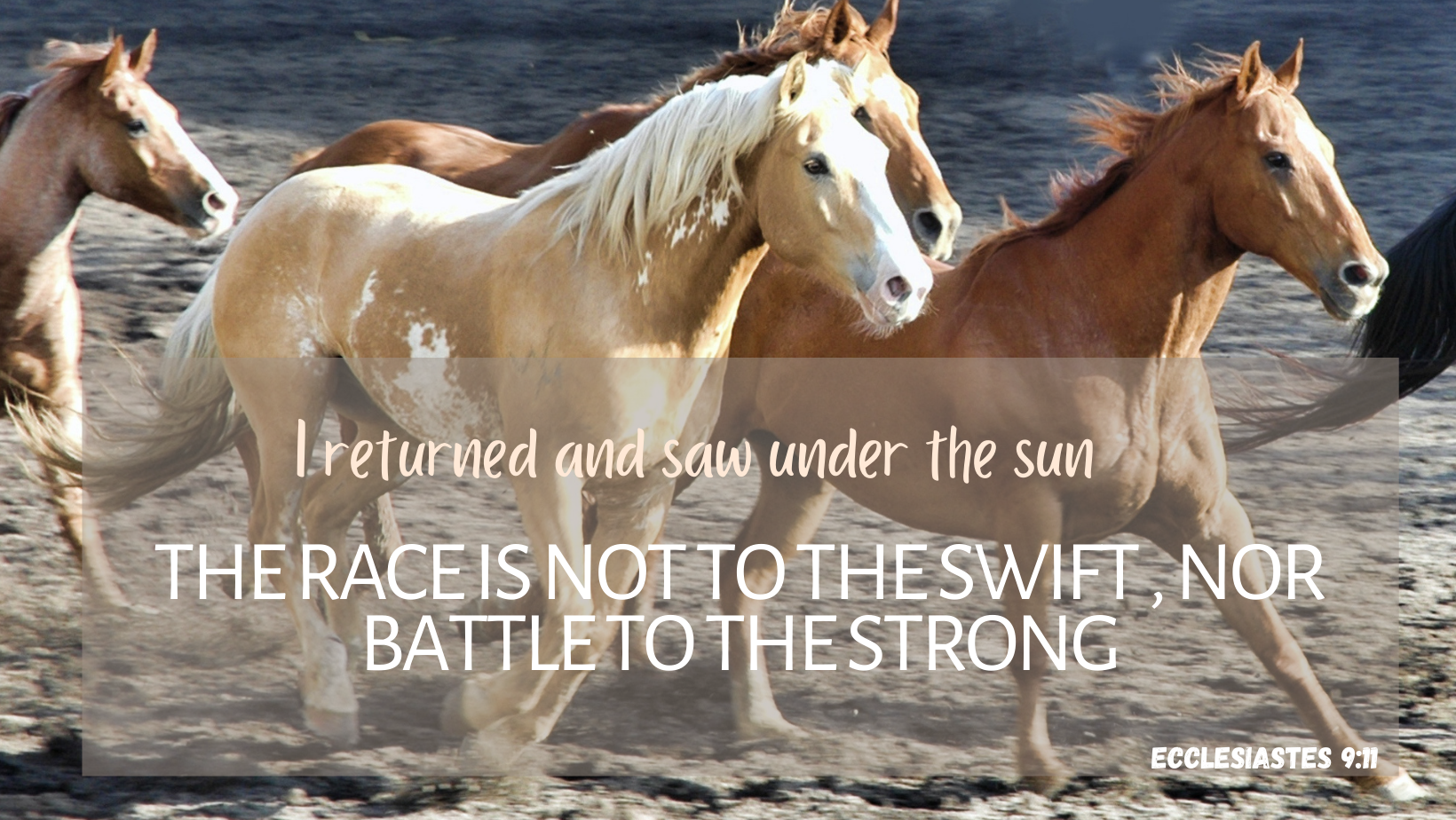
I returned, and saw under the sun, 
that the race is not to the swift, 
nor the battle to the strong, 
neither bread to the wise, 
nor riches to men of understanding, 
nor favor to men of skill; 
but time and chance happen to them all. 
Ecclesiastes 9:11 

 The New York times carried a story about this famous author who wrote a best seller on running (Jim Fixx (b.1932), author of the seminal 1977 best seller "The Complete Book of Running). Prior to taking up running seriously, Jim was 214 pounds and addicted to smoking two packs of cigarettes a day. However Jim became devoted to running in 1967 at the age of 35. A decade later, The Complete Book of Running (on the best-seller list for 11 weeks) was published by him. He was 60 pounds less and smoke free. His book inspired many people. He extolled the benefits of physical exercise and how it considerably increased the average life expectancy of people in the book and in television talk shows. 

 But he collapsed and died suddenly at the age of 52 of a massive heart failure in Hardwick, Vt. He became the father of a running revolution in America. In memory of the legacy of the running guru a carved granite book with an inscription to him now stands in Hardwick Memorial Park, Vt . He had three partially blocked vessels (95%, 85%, & 50%). The medical experts say "Exercise helps reduce heart disease, but it's not absolute protection." Jim had a family history of poor hearts and his early unhealthy lifestyle caught up with him. His running may have extended his life by a few years, but could he have prevented the inevitable? It is true, life is unpredictable and whatever we do cannot protect us when the time comes for us to move on. 

 In life all of us are not equally endowed with all the gifts. To some although they may have been the fastest runner, strongest warrior, wisest person, or competent person, they are not always the ones who finally are the most successful. Overtime, due to various factors some become successful or victorious. Some become very rich and lead prosperous lives. The most important goal in our lives as Christians is to live our lives loving, trusting, obeying, and serving God. Paul says in Philippians 2:3 do not try hard to make a good impression on others, but be humble and think others as better than yourself. Paul further exhorts us to work hard and cheerfully as if we were working for the Lord rather than for people (Ephesians 6:7). We must learn to treasure each day that we live with gratitude and appreciation for God's presence in our our lives and the promise of the gift of eternal life with Him.